
Example project
Fixing a waterlogged backyard in Brisbane: DIY drainage with a licensed plumber for the connection
Quick answer
You can do most of the work on a backyard subsoil drain yourself: digging the trench, laying the fabric, gravel and slotted pipe, and backfilling. In Queensland, all plumbing and drainage work except "unregulated work" must be done by a licensed plumber or drainer. That means connecting to the stormwater system needs a licensed tradie. In this example, the homeowner digs and lays an 8 m drain. A licensed plumber/drainer gives a 20-minute video diagnosis, makes a 1-hour visit to set the fall and the discharge point, and comes back for the connection.

At a glance
| Problem | Lawn and garden stay waterlogged for days after rain |
|---|---|
| Fix | 8 m agricultural (subsoil) drain to the property's stormwater point |
| Trench | About 300 mm wide × 400–600 mm deep, falling at least 1:100 |
| Your time | 2 weekends |
| Specialist | Licensed plumber/drainer: 1 video call, 2 short on-site visits |
| Outdoor Equity booking fees | $50 per on-site visit, $20 per call |
The steps
- After rain, take photos and a short video of where water sits and where it comes from
- Video diagnosis: plumber/drainer reviews photos and live video, confirms whether a subsoil drain is the right fix and where it can legally discharge
- Call Dial Before You Dig (1100) and wait for the plans
- Visit 1: plumber/drainer marks the trench line, sets the fall with a string line, and confirms the discharge point and pipe sizes
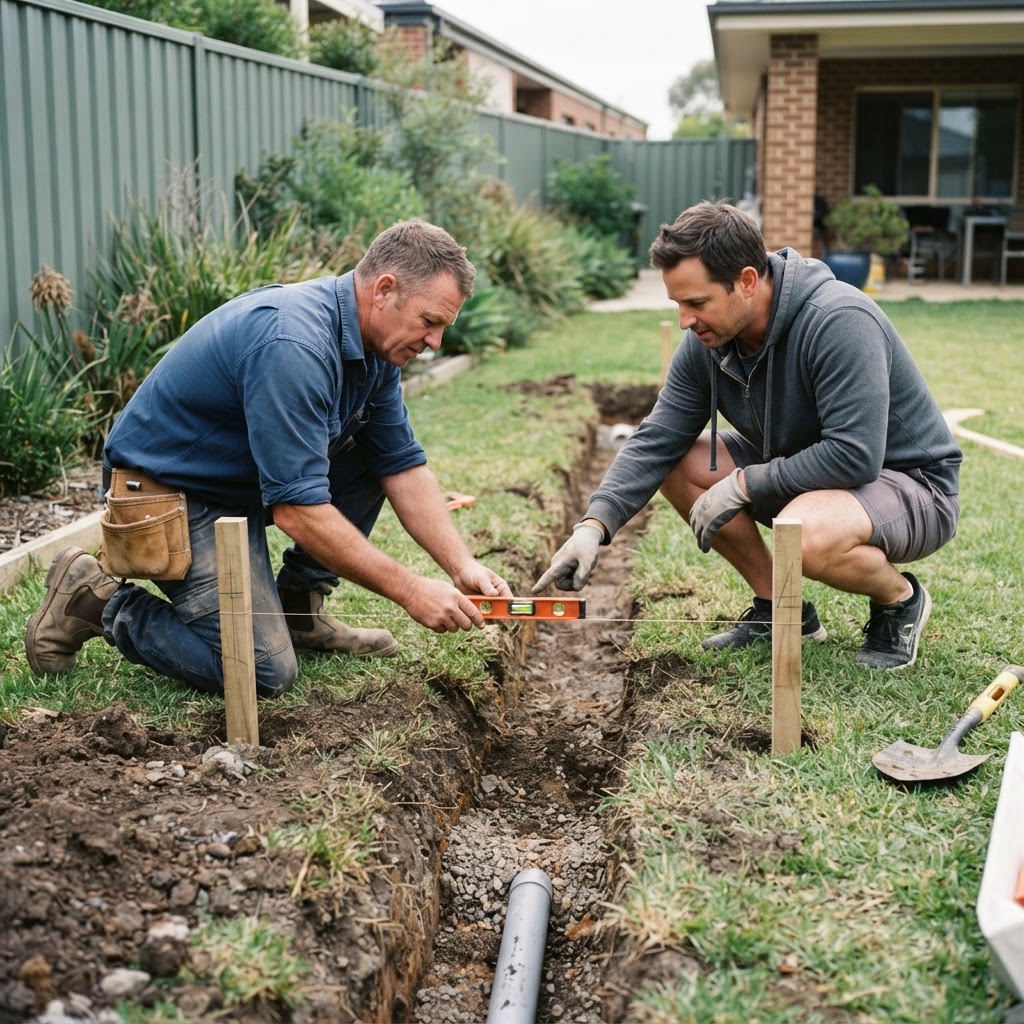
- Hire a trencher or dig by hand to the marked depth and fall
- Line the trench with geotextile fabric, add a gravel bed, lay the slotted pipe in a sock, cover with gravel, then wrap the fabric over the top

- Visit 2: plumber/drainer makes the regulated connection to the stormwater system and checks the fall before you backfill
- Backfill with soil and turf over, or finish with river pebbles
- After the next rain, send photos so the plumber can confirm it's working
What the specialist does, and what you do
The plumber/drainer handles the parts that need a licence: deciding where water can legally go and connecting to the stormwater system. They also set the fall, which is where DIY drains most often fail. You do the digging and the laying, which is most of the hours.
Materials and tools
- 100 mm slotted agricultural pipe with filter sock
- Geotextile fabric, 20 mm drainage gravel
- Fittings and pipe to the discharge point, as specified by your plumber
- Tools: string line and pegs, spirit or laser level, spade and trenching shovel, wheelbarrow. Hire a trencher for longer runs.
Rules to check before you start
- All plumbing and drainage work other than unregulated work must be done by a licensed plumber or drainer.
- Don't send water onto a neighbour's property. Water must go to a lawful point of discharge, which your plumber will confirm.
- Check for flood and overland flow overlays on your property.
- Dial Before You Dig before any trenching.
Frequently asked questions
Can I install an agricultural drain myself in Queensland?
You can dig and lay it. Connecting it to the stormwater system is regulated drainage work for a licensed plumber or drainer.
How deep should a backyard ag drain be?
Commonly 400–600 mm, with a continuous fall of at least 1:100 towards the discharge point. Your plumber sets the exact depth and fall on site.
How much tradie time does this need?
In this example, a 20-minute video call and two short visits, compared with a crew doing the whole job.
Sources
Plan your own version
Start with your address. We check your lot and overlays, map where water can go, and book only the specialist time the job actually needs.
Related examples
-

A deck that may not need approval
A 9.6 m² deck you build, with a carpenter for the footings and hero cuts.
-

Paver patio
A 4 × 4 m patio you excavate, compact and lay, with a landscaper for levels and cuts.
-

Freestanding pergola kit
A 3.0 × 3.0 m kit, squared up by a carpenter, lit by a licensed electrician.
Example project for general information only. It is not plumbing or legal advice. Drainage rules depend on your property. A licensed plumber or drainer must do all regulated work.